In-Situ Oil Quality Sensing Research
Investigating methods to monitor oil quality in-situ on diesel engine lubrication cycles using resonating viscometer technology and benchtop testing facilities.
Skills
Overview
I’m working to investigate methods for monitoring oil quality in-situ on diesel engine lubrication cycles. Traditional oil analysis requires sampling and lab testing, which is time-consuming and can’t provide real-time feedback. This research aims to enable continuous monitoring of oil degradation to optimize maintenance schedules and prevent engine damage.
Using a custom benchtop facility that mimics the conditions encountered during an actual diesel engine cycle, I’m able to test and validate sensing approaches in a controlled environment.
Research Objective
Develop and validate techniques for real-time oil condition monitoring that can operate continuously in the harsh environment of a diesel engine lubrication system, providing actionable data on oil degradation without requiring laboratory analysis.
Benchtop Facility
Experimental Setup
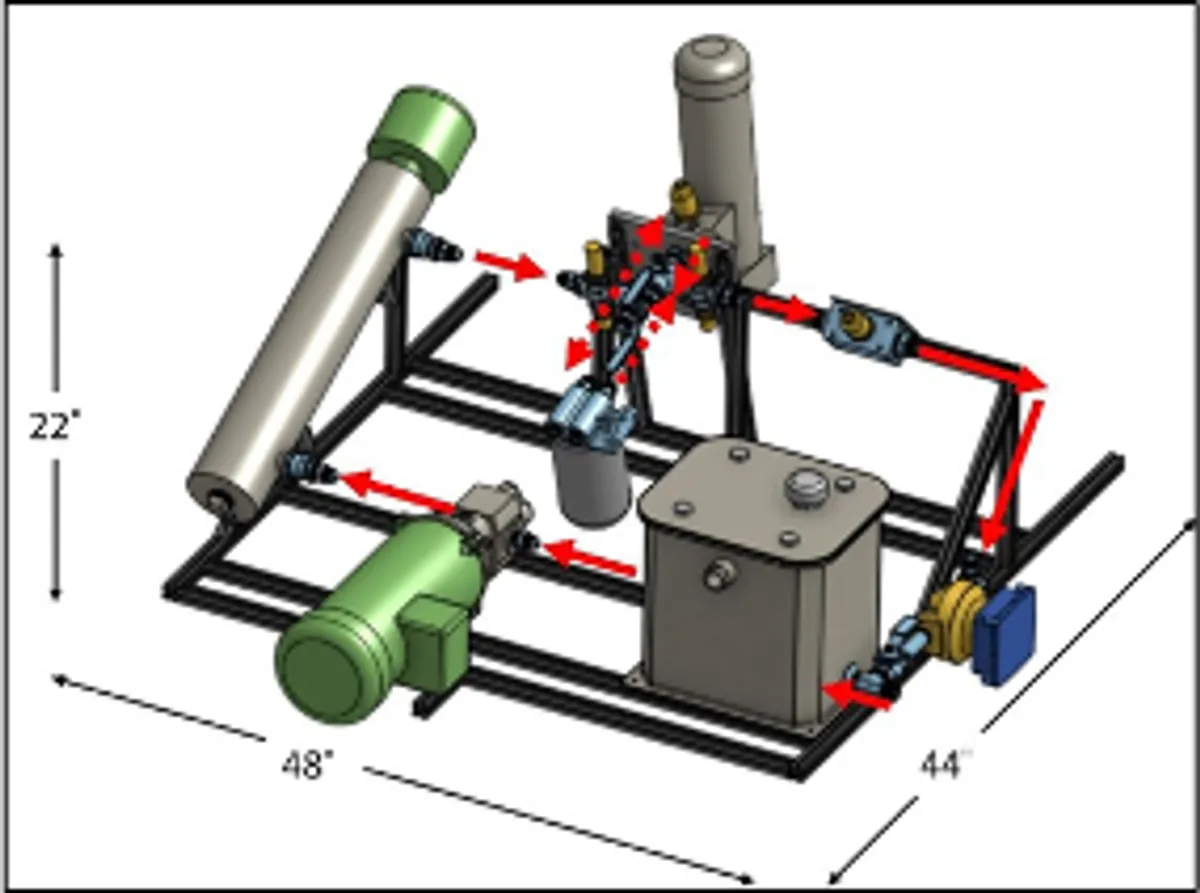
The benchtop facility replicates the operating conditions of a diesel engine lubrication cycle, including realistic pressure, temperature, flow rate, and aeration levels. This controlled environment allows for systematic investigation of sensor performance across the full operating envelope.
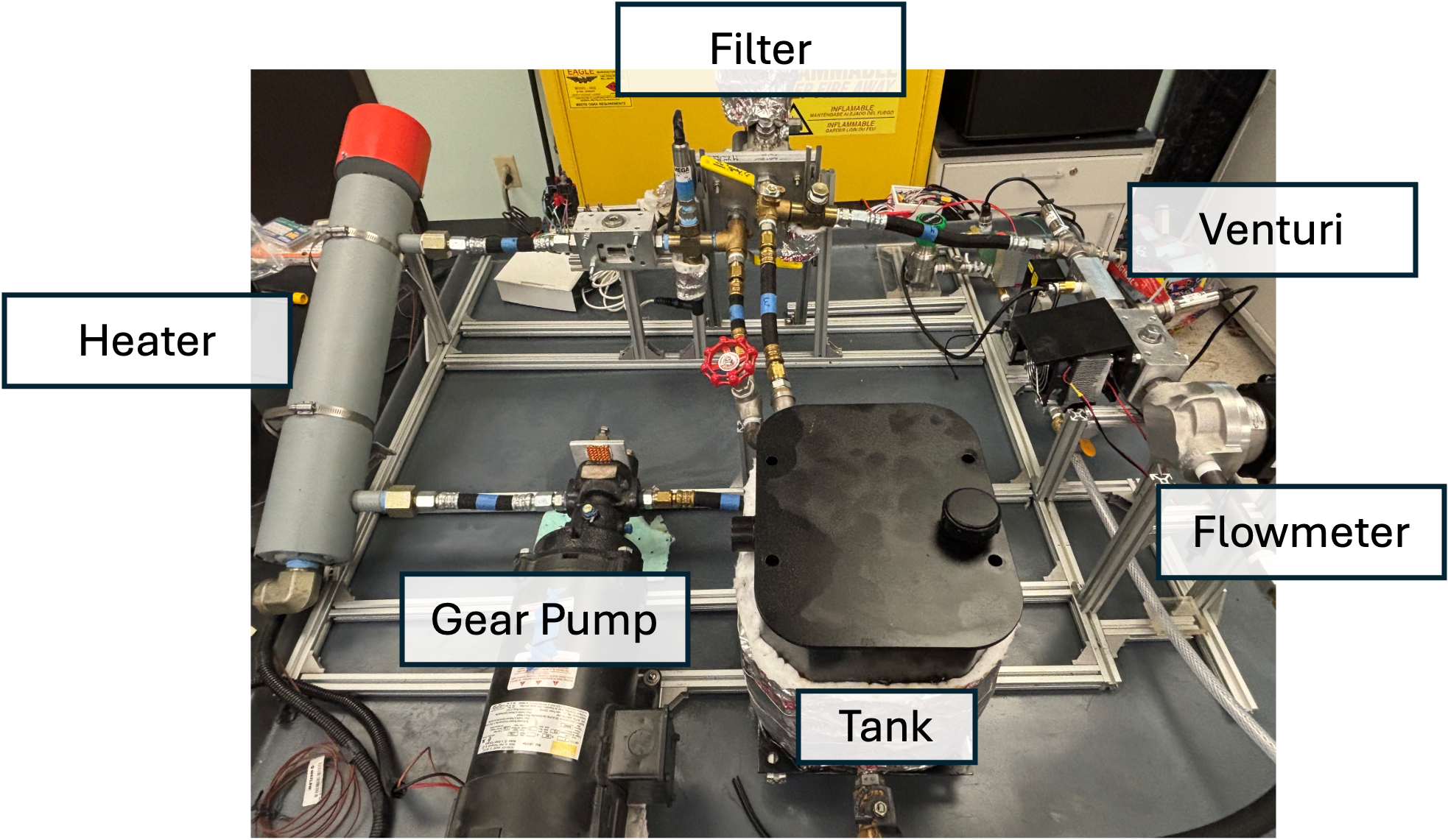
Schematic diagram of the benchtop diesel lubrication cycle facility
Resonating Viscometer Integration
Sensor Technology
I’ve been investigating how to integrate a resonating viscometer in-line with the lubrication cycle. This sensor measures fluid viscosity by monitoring the resonant frequency of a vibrating element immersed in the oil.
The key challenge is understanding how the sensor responds not just to viscosity changes from oil degradation, but also to variations in operating conditions. I’m systematically assessing the influence of multiple parameters on measurement capability:
- Temperature — Oil temperature significantly affects viscosity, making this relationship critical to characterize for accurate measurements
- Flow Rate — Flow velocity past the sensor may introduce measurement artifacts that must be understood and compensated for
- Pressure — System pressure variations can affect both the fluid properties and sensor response
- Aeration — Air entrainment in the oil is common in diesel engines and can significantly impact viscosity measurements
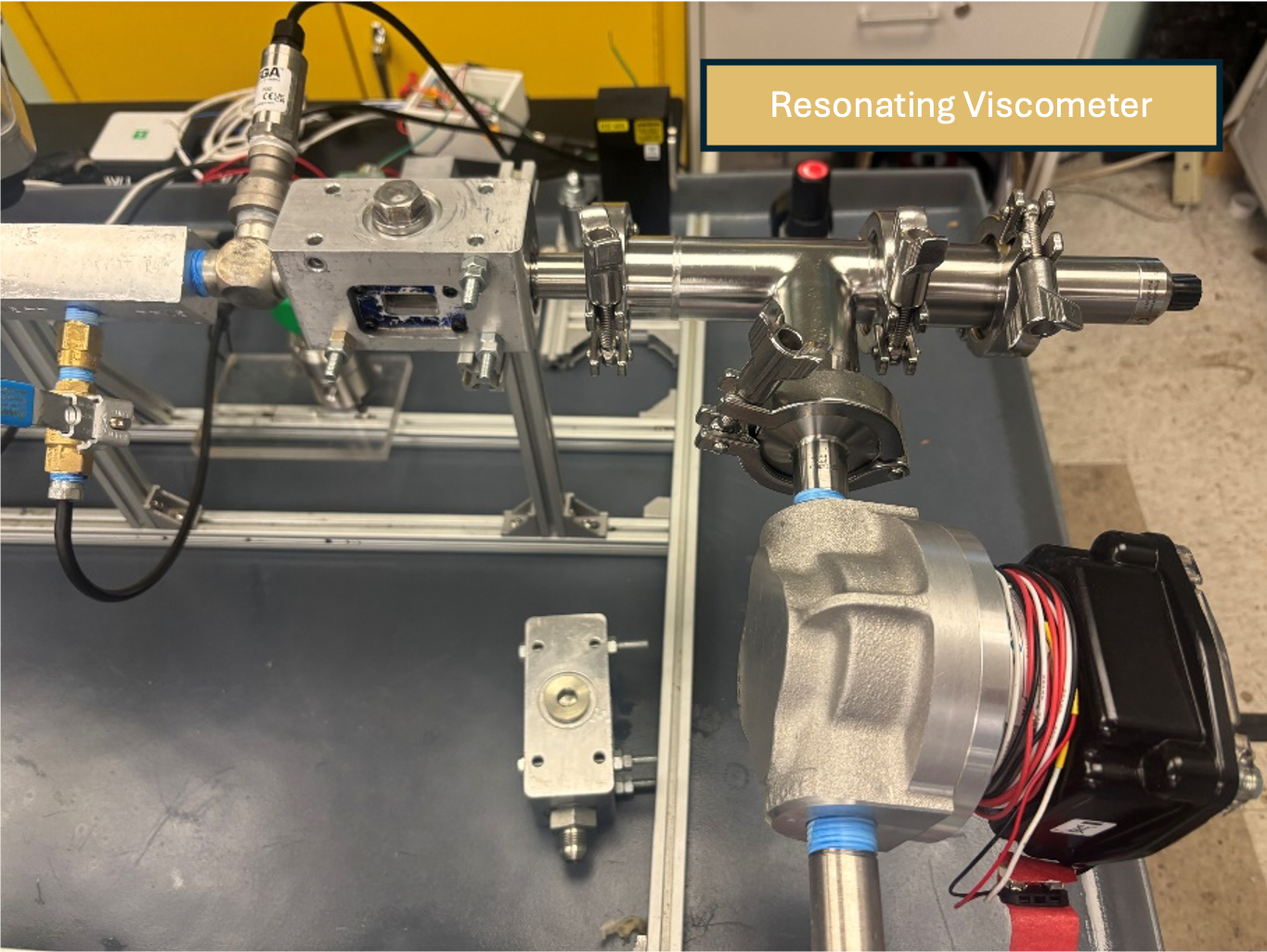
Resonating viscometer integrated into the test facility
Current Status
This is an ongoing research project at the Vanderbilt Aerospace Design Lab. The benchtop facility is operational, and I’m currently conducting parametric studies to build calibration models that account for the complex interactions between operating conditions and sensor response.
The ultimate goal is to develop a robust sensing approach that can reliably indicate oil degradation in real-world diesel engine applications, enabling predictive maintenance and optimized oil change intervals.