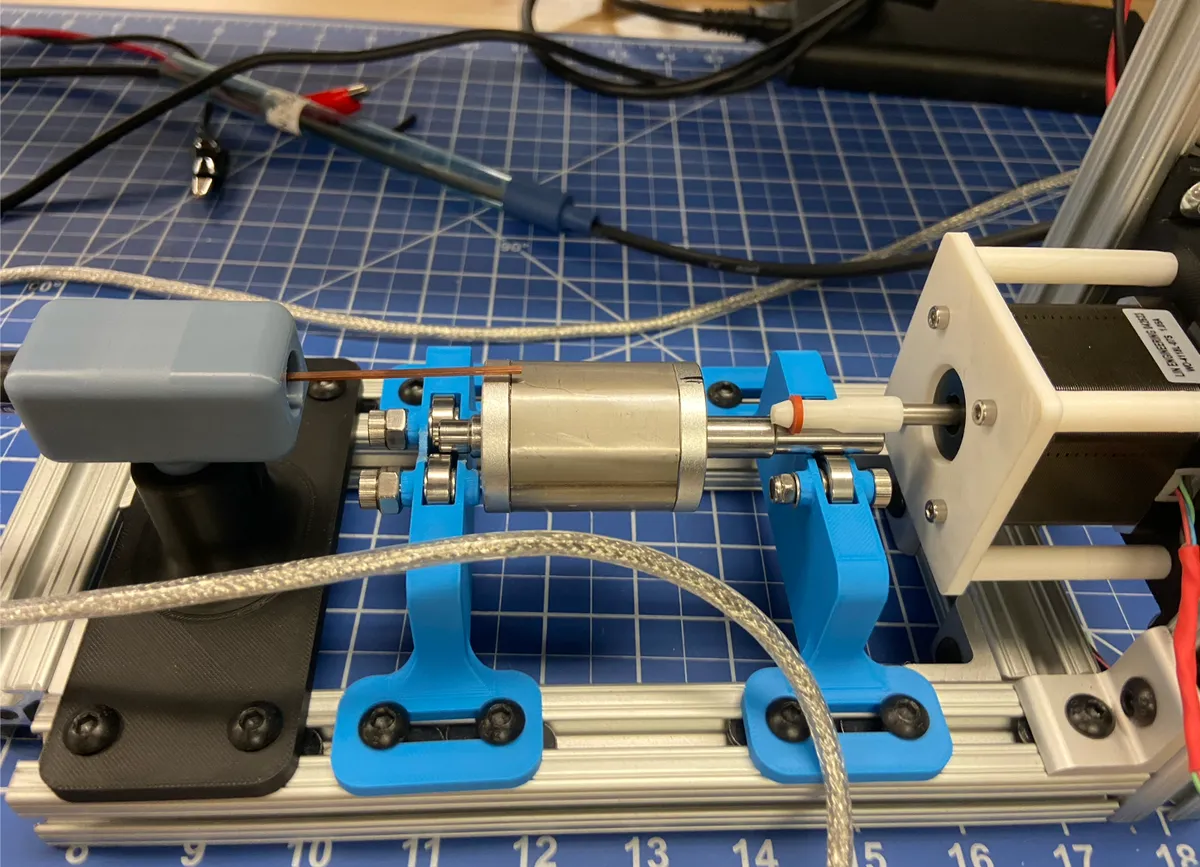
Magnetic Imbalance Test Fixture
Designed and built a custom test fixture to characterize magnetic imbalance in BLDC rotors for quality control. Automated testing system with Python-based peak detection algorithm to identify damaged magnets.
Skills
Project Context
At Whisper Aero, we develop ultra-quiet electric propulsor assemblies for next-generation aircraft. As part of our noise reduction efforts, we needed to verify that magnetic imbalance in our BLDC (Brushless DC) rotors wasn’t contributing to unwanted vibration and noise.
To address this, I designed and built a custom test fixture to characterize magnetic field uniformity across rotors and identify units with damaged or misaligned magnets.
The Problem
BLDC motors rely on permanent magnets embedded in the rotor. If these magnets are:
- Damaged during manufacturing or shipping
- Improperly magnetized
- Misaligned during assembly
…they create magnetic field asymmetries that produce uneven torque, vibration, and acoustic noise—exactly what we’re trying to eliminate in our ultra-quiet propulsors.
Traditional quality control methods couldn’t easily detect subtle magnetic imbalances without expensive specialized equipment.
Solution: Automated Magnetic Field Mapping
I built a test fixture that automates the process of measuring magnetic field strength around the entire circumference of a rotor.
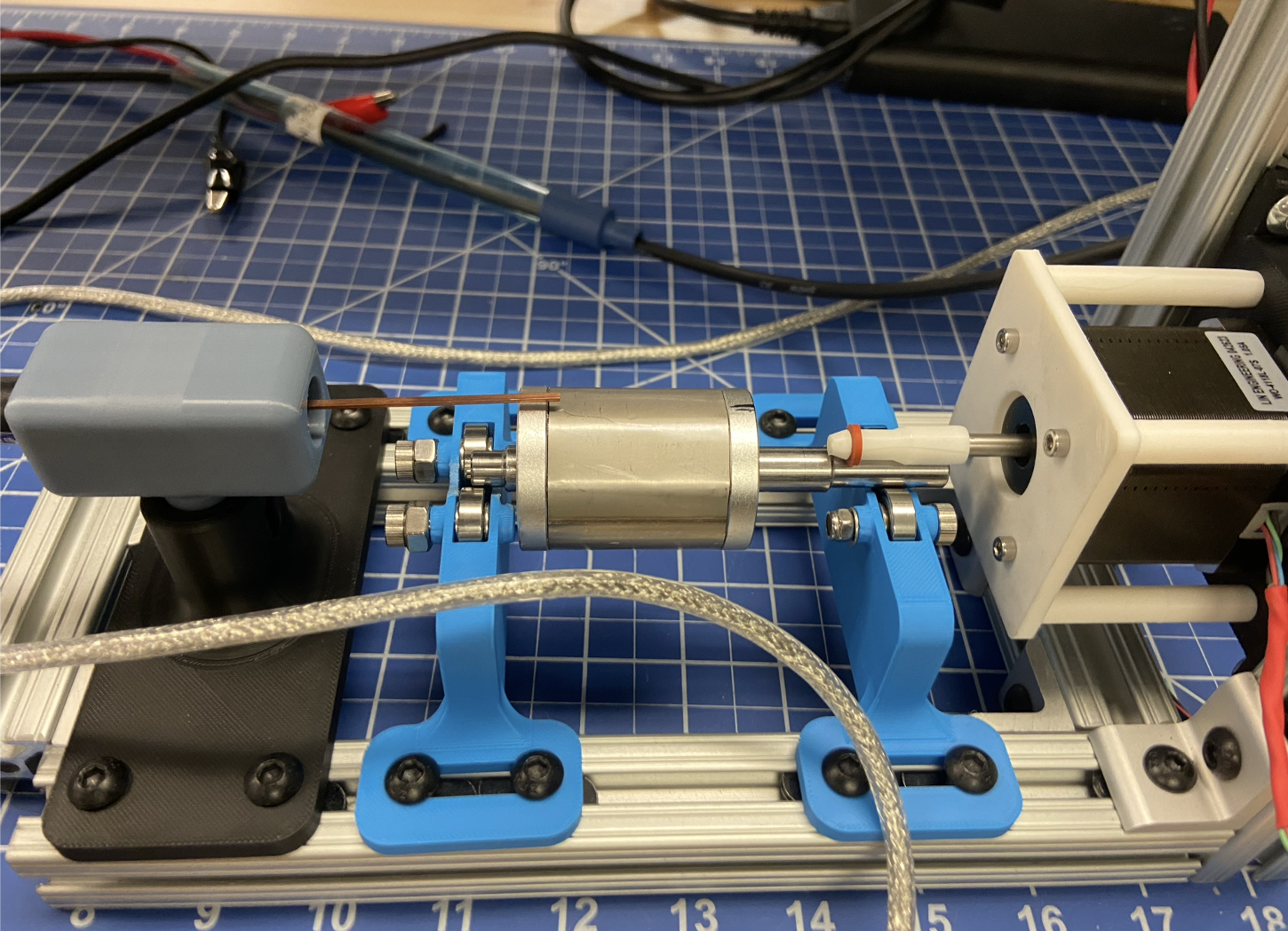
Magnetic imbalance test fixture with stepper-driven rotor and Gaussmeter probe
How It Works
1. Rotor Mounting
The rotor is held in precision V-blocks and coupled to a stepper motor via an O-ring drive, allowing smooth rotation without magnetic interference from ferrous components.
2. Controlled Rotation
A stepper motor precisely rotates the rotor in small angular increments. The stepper is controlled via CAN bus directly from my laptop as part of the test script.
3. Field Measurement
At each angular position, a Gaussmeter probe measures the magnetic field strength. The Gaussmeter is connected directly to my laptop for synchronized data acquisition.
4. Automated Analysis
A Python script collects data, performs peak detection on the sinusoidal field pattern, and automatically identifies weak points indicating damaged magnets.
Design & Fabrication
I designed the entire fixture in SolidWorks, optimizing for:
- Magnetic neutrality — Non-ferrous materials and sufficient standoff distance to avoid interfering with measurements
- Precision alignment — V-blocks ensure repeatable rotor positioning
- Modularity — 80/20 aluminum extrusion base allows easy reconfiguration
Manufacturing:
- Custom mounting brackets and V-blocks 3D printed on Bambu Lab printers
- Assembled using readily available 80/20 components
- Low-cost solution (~$200 total) compared to commercial alternatives ($5,000+)
Python Data Analysis Pipeline
I developed a complete Python-based control and analysis system:
Control System:
- Commands stepper motor via CAN bus interface
- Synchronizes Gaussmeter readings with angular position
- Runs full 360° scans automatically
Peak Detection Algorithm:
- Processes the sinusoidal magnetic field strength curve
- Identifies peak-to-peak variations at each magnet pole
- Calculates percent difference between expected and measured field strength
- Flags rotors exceeding imbalance thresholds
Automated Reporting:
- Generates plots showing field strength vs. angular position
- Highlights weak points corresponding to damaged magnets
- Outputs pass/fail results for QC records
Impact & Implementation
Quality Control Integration
The fixture was integrated into Whisper Aero’s quality control process as a standard test for all incoming motors.
- ✓ Enables rapid screening of motor shipments before assembly
- ✓ Catches damaged rotors that would otherwise cause noise issues
- ✓ Provides quantitative data for vendor feedback and quality improvement
- ✓ Reduces time spent troubleshooting acoustic issues downstream
This project demonstrated how custom test equipment—designed specifically for your application—can provide better results than off-the-shelf solutions while being faster and more cost-effective to implement.