Vanderbilt Aerospace Design Lab — NASA USLI
Vice President, Simulations Lead, and Avionics & Recovery Lead for Vanderbilt's 7× national champion NASA Student Launch team. Leading systems design, simulations, and avionics for a 25-member team building high-power rockets.
Skills
- Visit the team’s website
- Follow us on Instagram
- Read this year’s Preliminary Design Review
Overview
Vanderbilt Aerospace Design Lab (VADL) is Vanderbilt’s premier rocketry program competing in NASA’s University Student Launch Initiative (USLI)—a rigorous year-long engineering design challenge where university teams design, build, test, and launch high-powered rockets to approximately one mile altitude while completing complex engineering payloads.
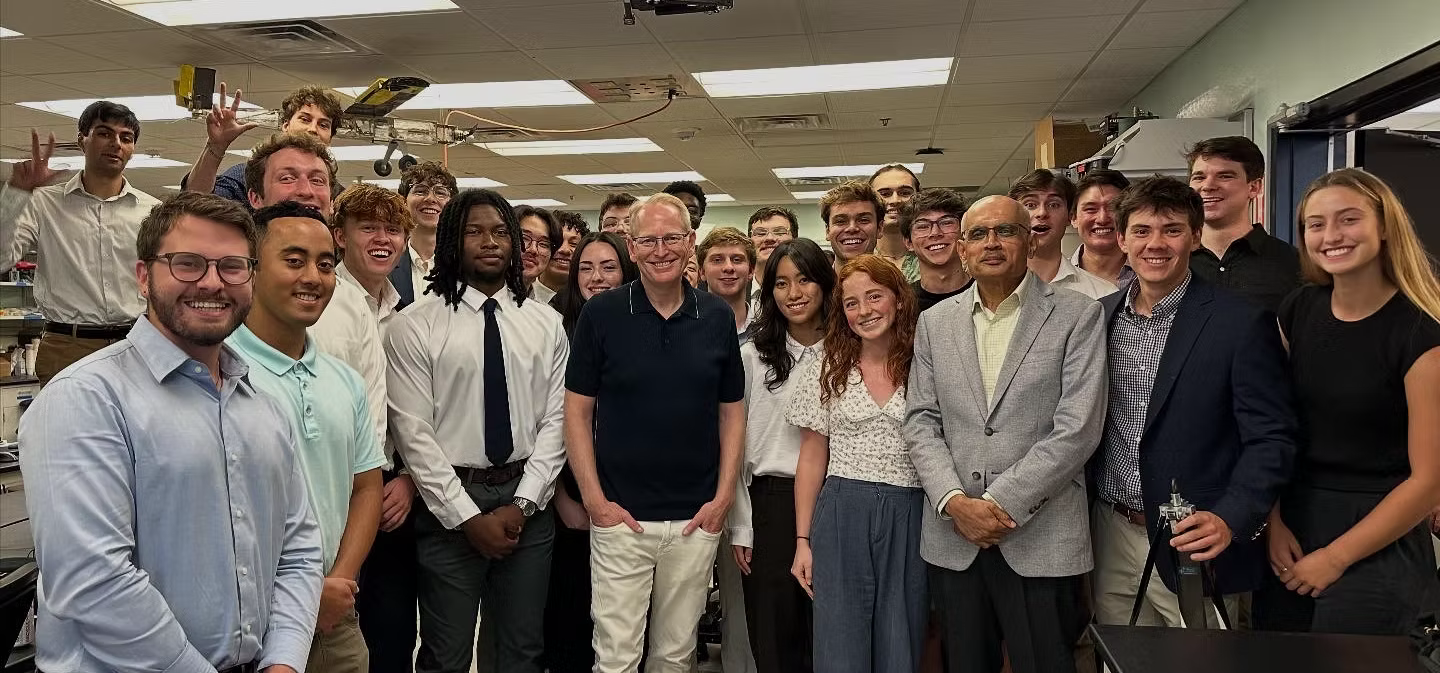
VADL 2025-26 team with David Limp, CEO of Blue Origin, during his visit to Vanderbilt
VADL operates across the full aerospace lifecycle: mission concept, requirements definition, simulation, fabrication, integration, test, flight, and post-flight analysis. The team presents detailed design reviews directly to NASA engineers and competes against top engineering programs nationwide.
2025-2026 Mission
Design & Build
L-class high-power rocket from scratch
Achieve Altitude
4,000+ feet AGL with precision targeting using novel apogee control system
R.O.L.L. Payload
Automated soil sampling mechanism
2025 Full Scale Launch
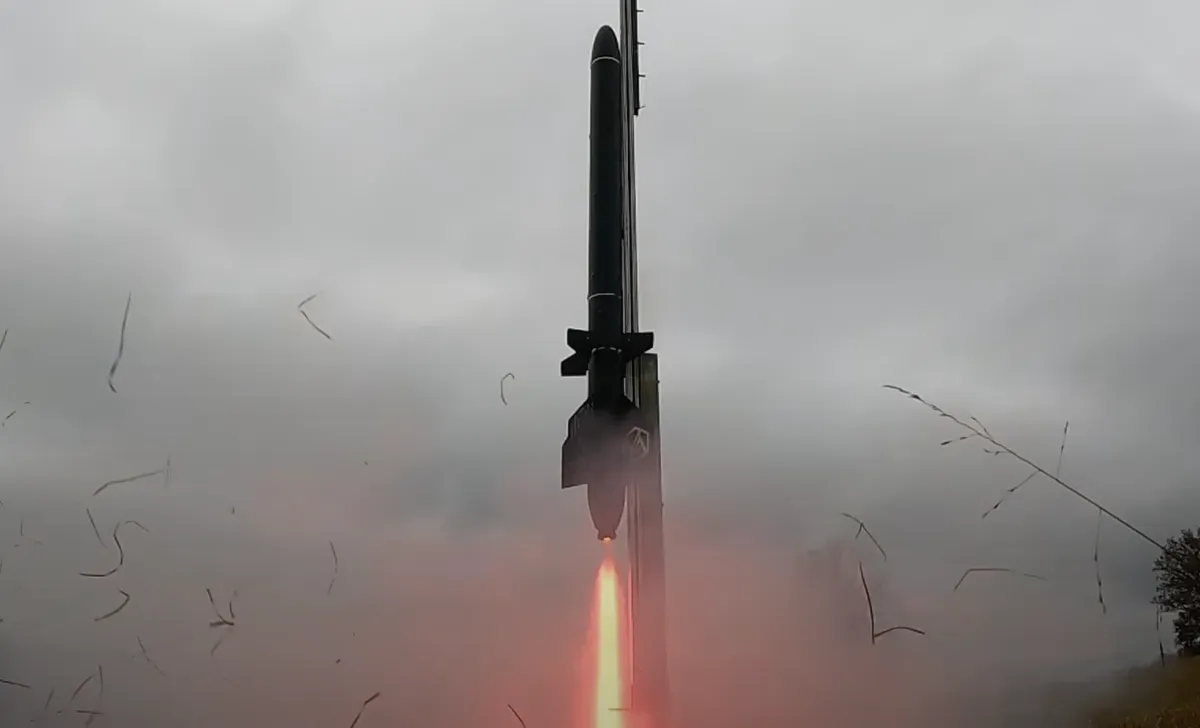
NASA Student Launch 2024-25 Full Scale Flight Test
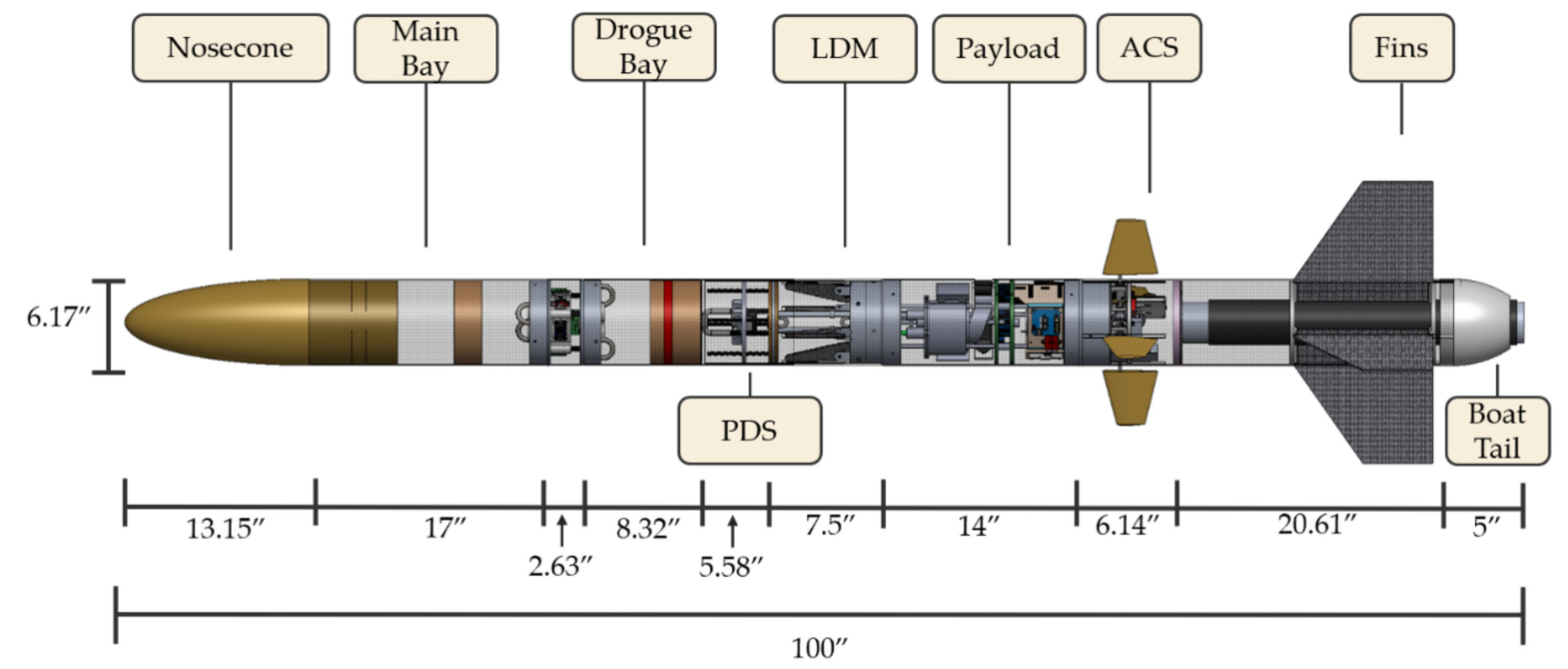
Full Vehicle Design
The launch vehicle features a modular airframe design with dedicated bays for recovery systems, avionics, and payload integration. Every component is designed, analyzed, and manufactured by student engineers.
My Role & Contributions
As a member of VADL leadership, I drive technical decisions across multiple subsystems while managing project execution for the full 25-member team.
Flight Simulations & Analysis
I lead the development and execution of all flight simulations to validate vehicle performance and ensure mission success.
Simulation Pipeline
| Parameter | Purpose | Tools |
|---|---|---|
| Apogee Prediction | Target altitude verification | MATLAB, OpenRocket, RockSim |
| Drift Analysis | Landing zone prediction | Custom MATLAB Sim |
| Stability Margins | Flight safety verification | OpenRocket, ANSYS |
| Landing Dynamics | Payload survival | MATLAB, FEA |
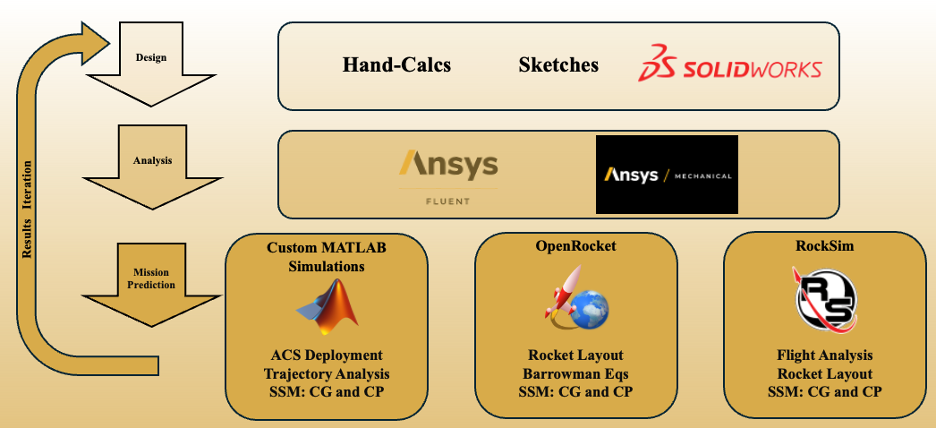
My integrated simulation approach for NASA Student Launch 2025-26
Computational Fluid Dynamics (CFD)
Using ANSYS Fluent, I perform CFD analysis on the launch vehicle to characterize aerodynamic performance:
- Drag coefficients across the flight Mach regime
- Center of pressure location for stability analysis
- Flow separation behavior around fins and transitions
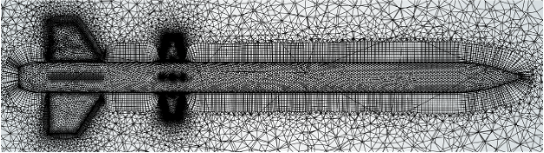
Computational mesh
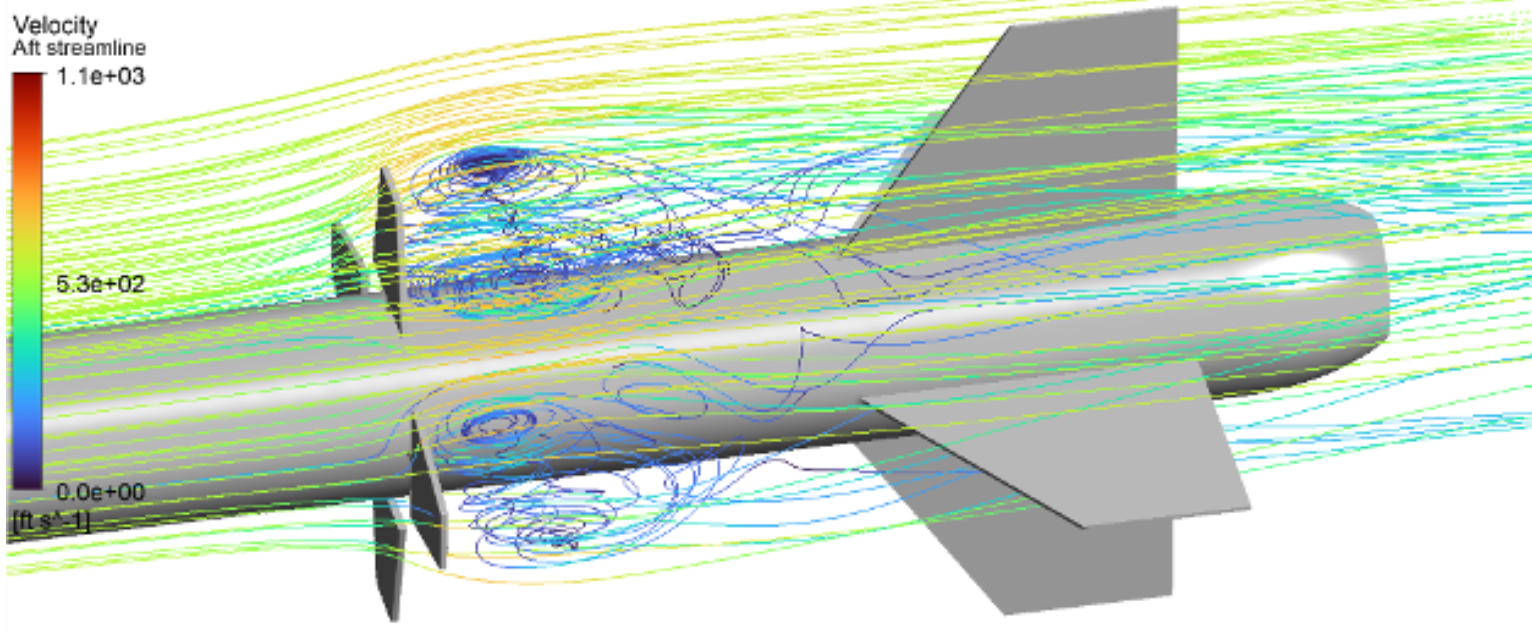
Flow streamlines
Custom MATLAB Flight Simulator
I developed a custom rocket flight simulator in MATLAB that enables rapid iteration on vehicle design:
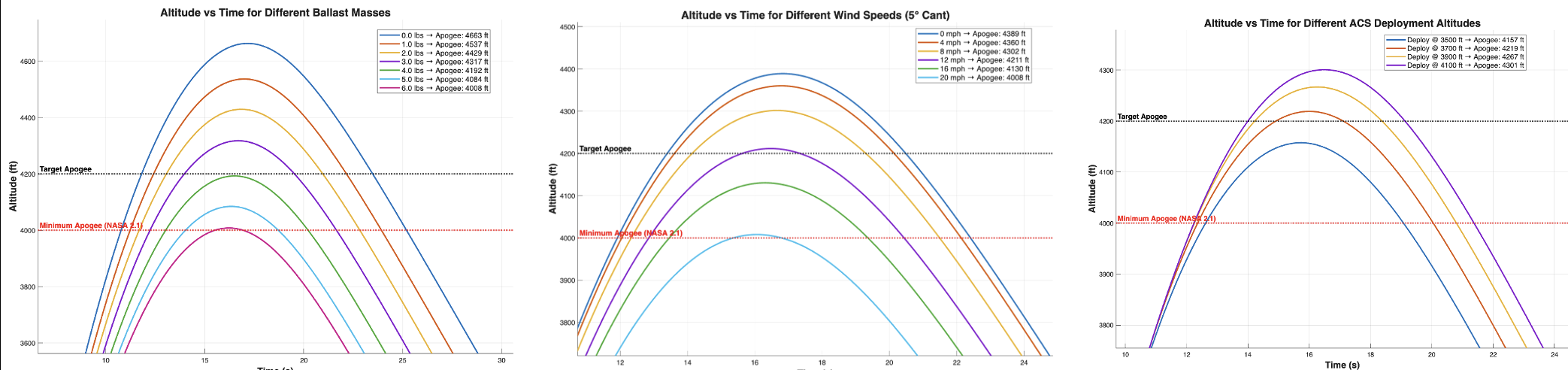
MATLAB flight simulation output
Avionics & Recovery Systems
As Avionics & Recovery Lead, I own the design of all flight electronics and recovery hardware.
Dual Redundant
Independent Power
Safe Arming
Dual Deploy
Flight Electronics
The avionics system uses redundant Altus Metrum EasyMini altimeters as both primary and backup flight computers. Each independently monitors altitude and controls recovery deployment via e-match ignition.
- Dual-redundant altimeters for fault tolerance
- 9V alkaline batteries (independent power)
- MissileWorks 6-32 arming switches
- Screw terminal breakout boards
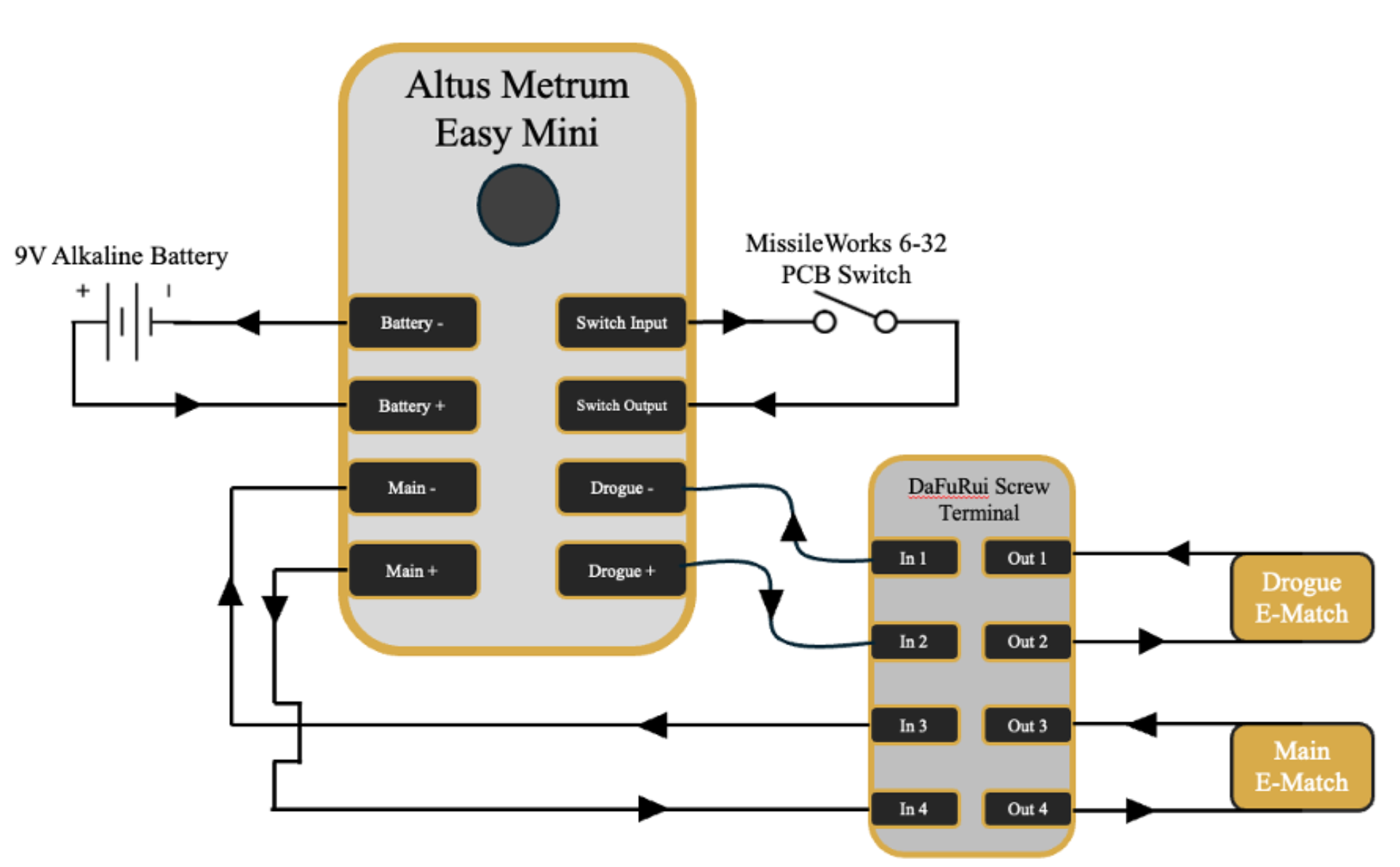
Electrical schematic
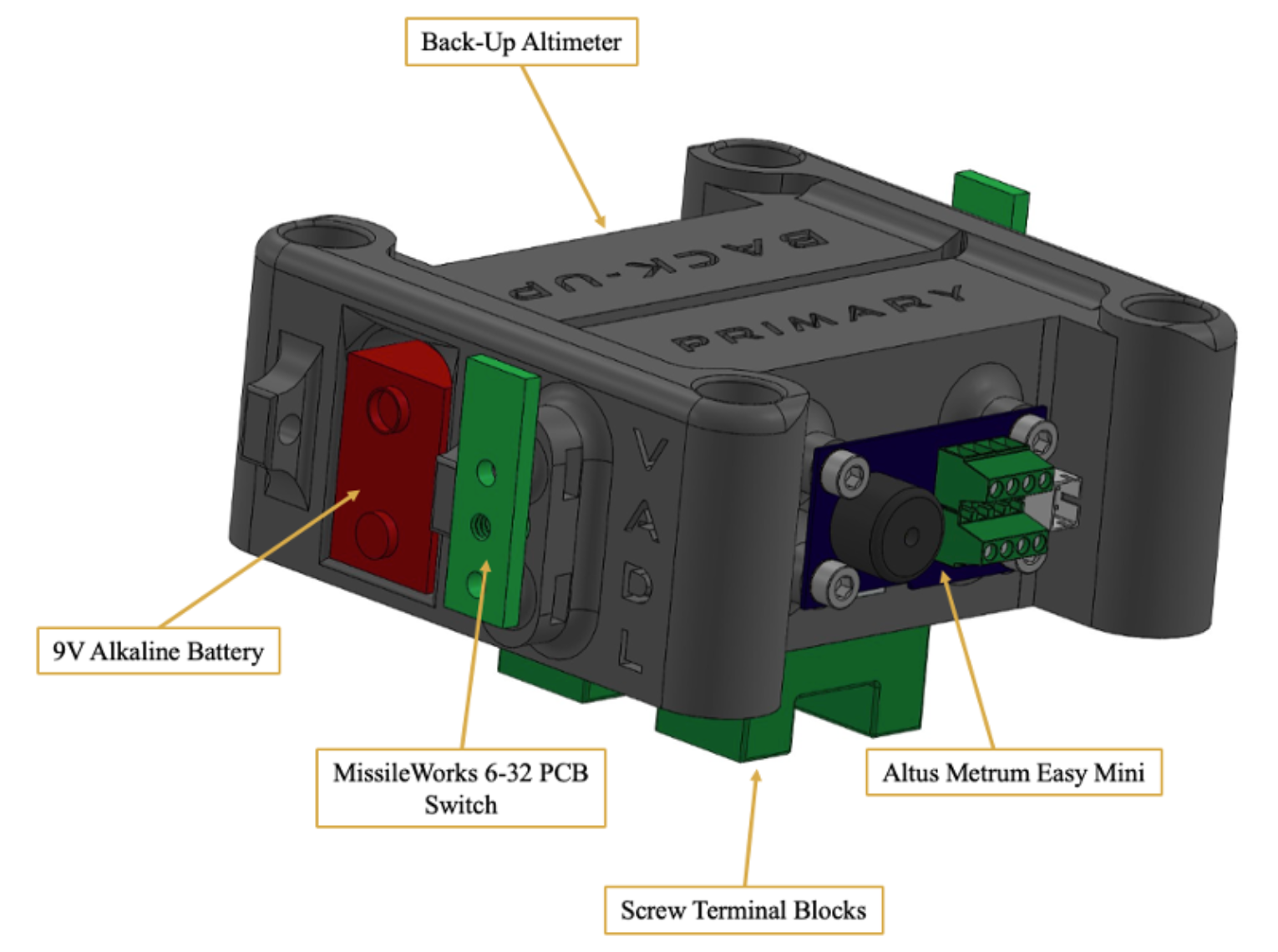
Avionics sled CAD model
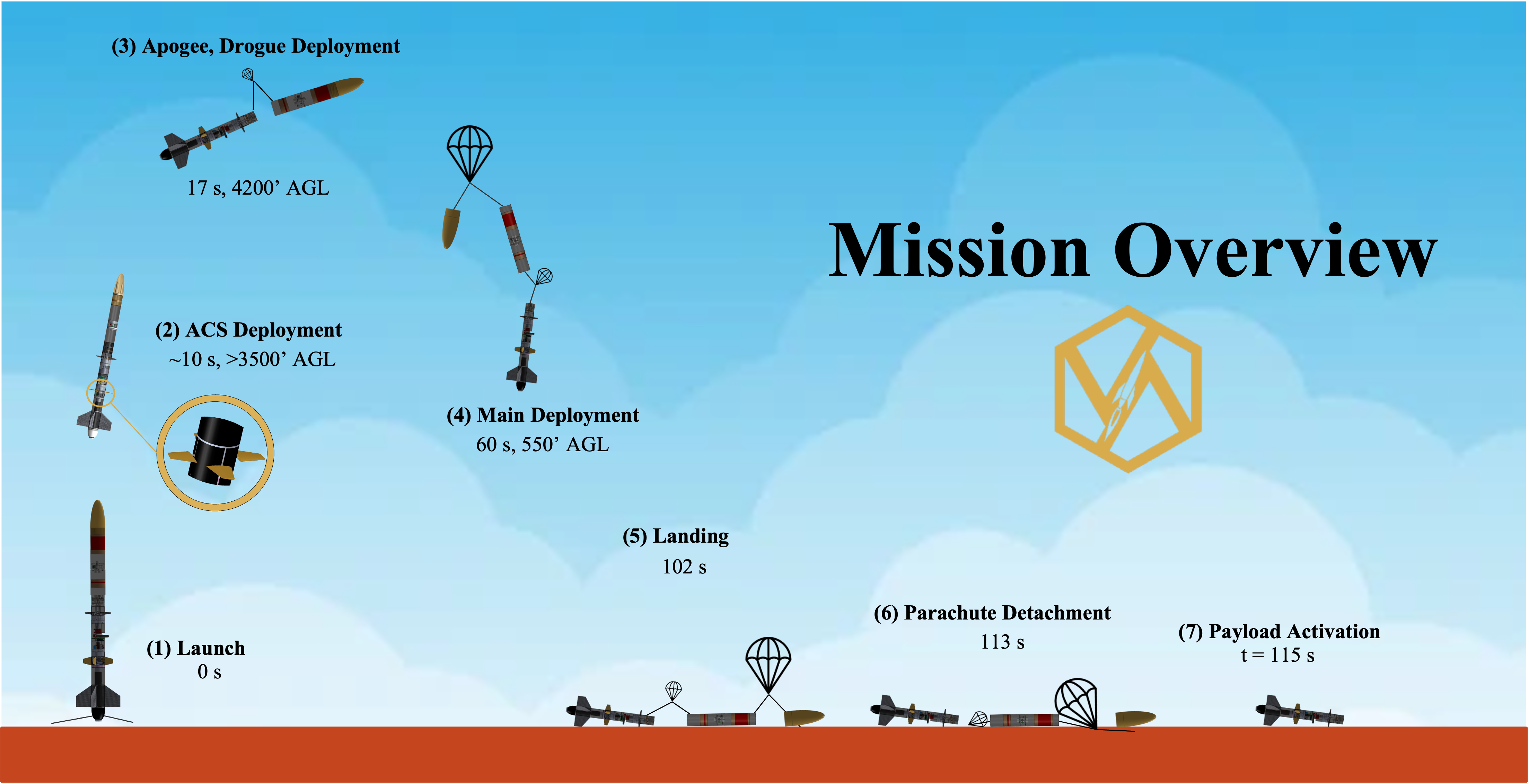
Complete mission flight profile showing all recovery events
Recovery Hardware
Dual-deployment recovery ensures safe vehicle return:
Using Fruity Chutes parachutes with redundant black powder charges and e-match ignition.
Vehicle Design & Mechanisms
I contribute to overall vehicle design and own several critical subsystems.
Leg Deployment Mechanism
I designed a passive leg deployment mechanism that enables the tail section to deploy four carbon fiber landing legs in flight, ensuring stable landing for payload operation.
Mechanism Design
- 1Spring-loaded deployment — single linear extension spring under tension
- 2Coupler-constrained — legs stowed while drogue bay coupler in place
- 3Passive actuation — coupler separates at drogue deployment
- 4Spring-driven plate — pushes all four legs through airframe slots
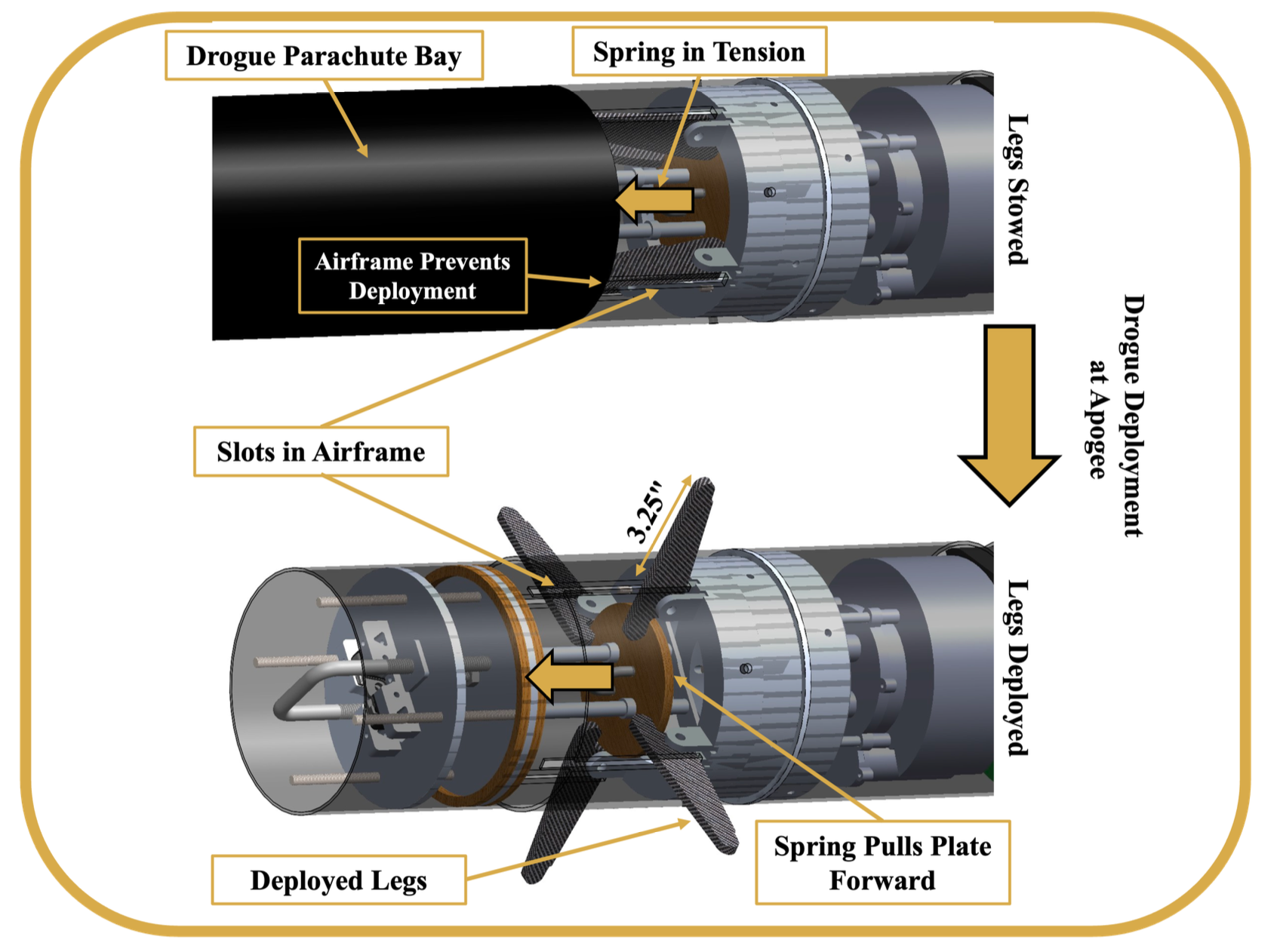
Stowed (top) → Deployed (bottom)
Outreach & Education
I regularly attend VADL outreach events where we inspire the next generation of engineers through hands-on rocketry demonstrations at local high schools and community events.
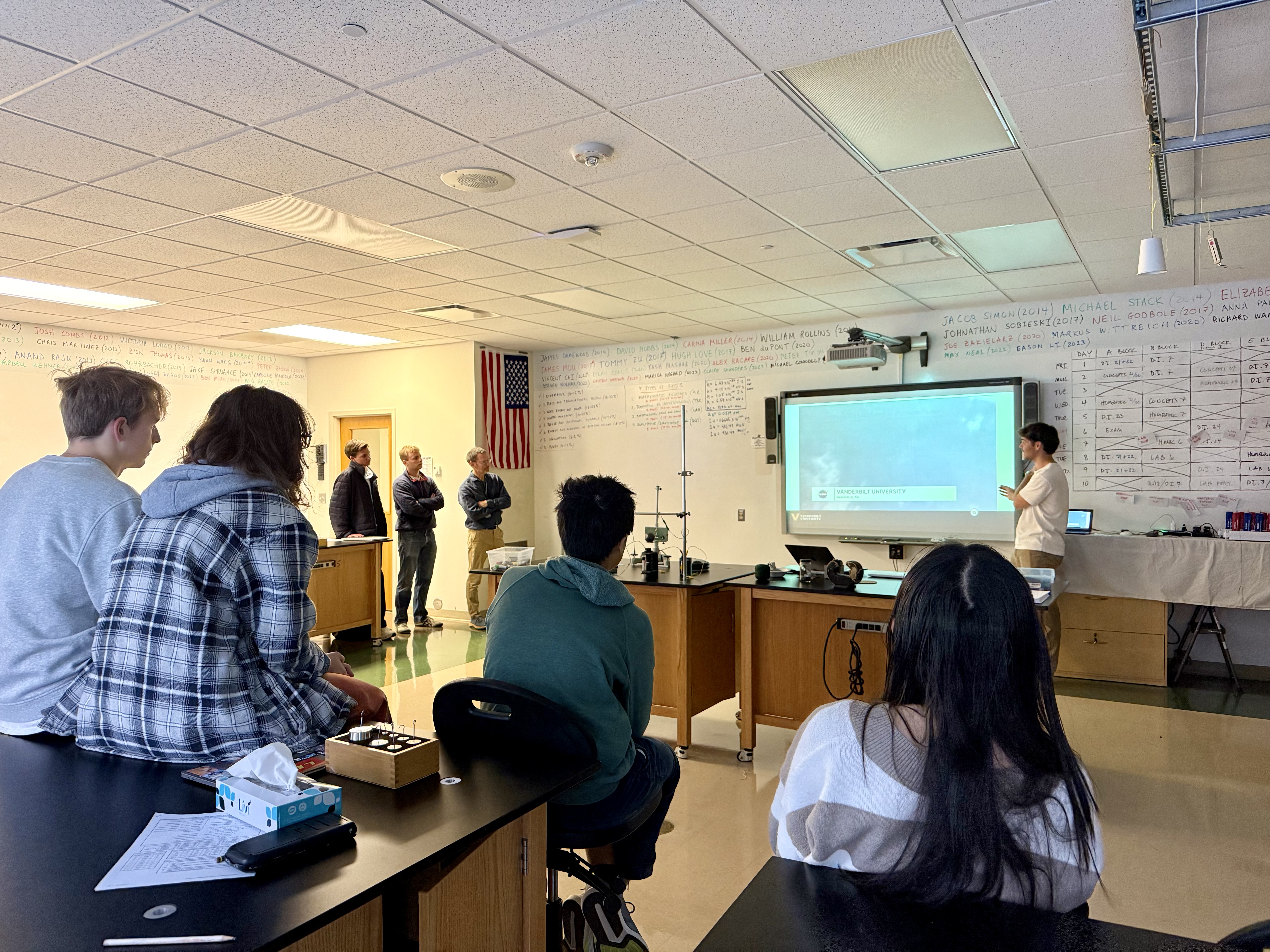
High School Visits
Presenting to engineering clubs about aerospace careers and hands-on rocketry
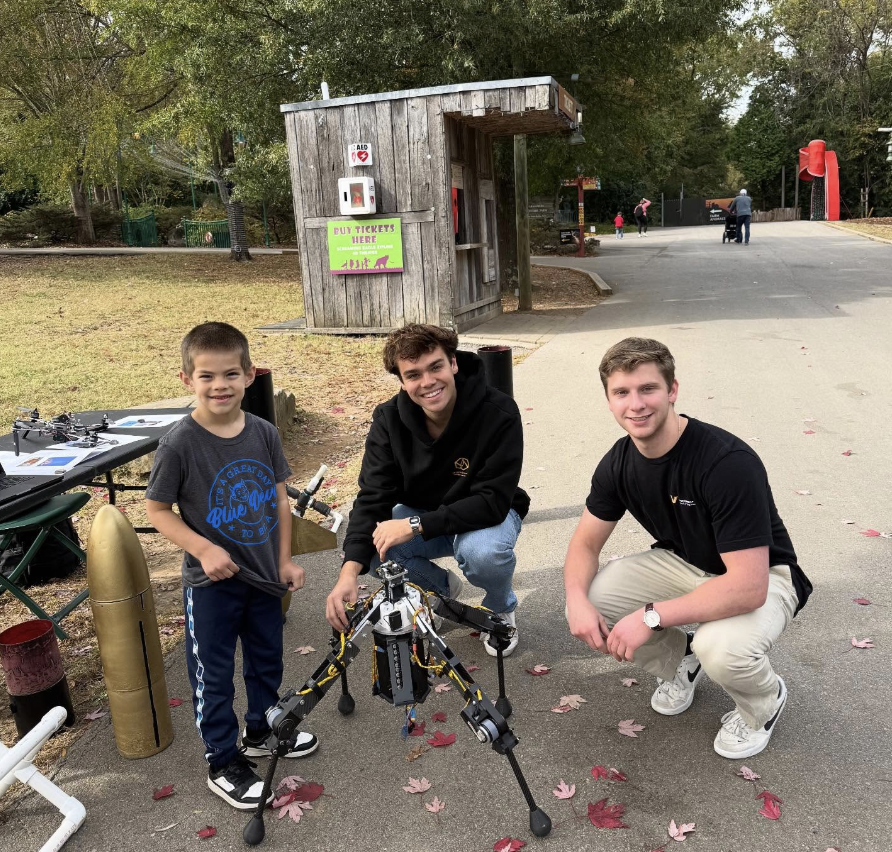
Community Events
Sharing hands-on rocketry demonstrations with young students